Introduction
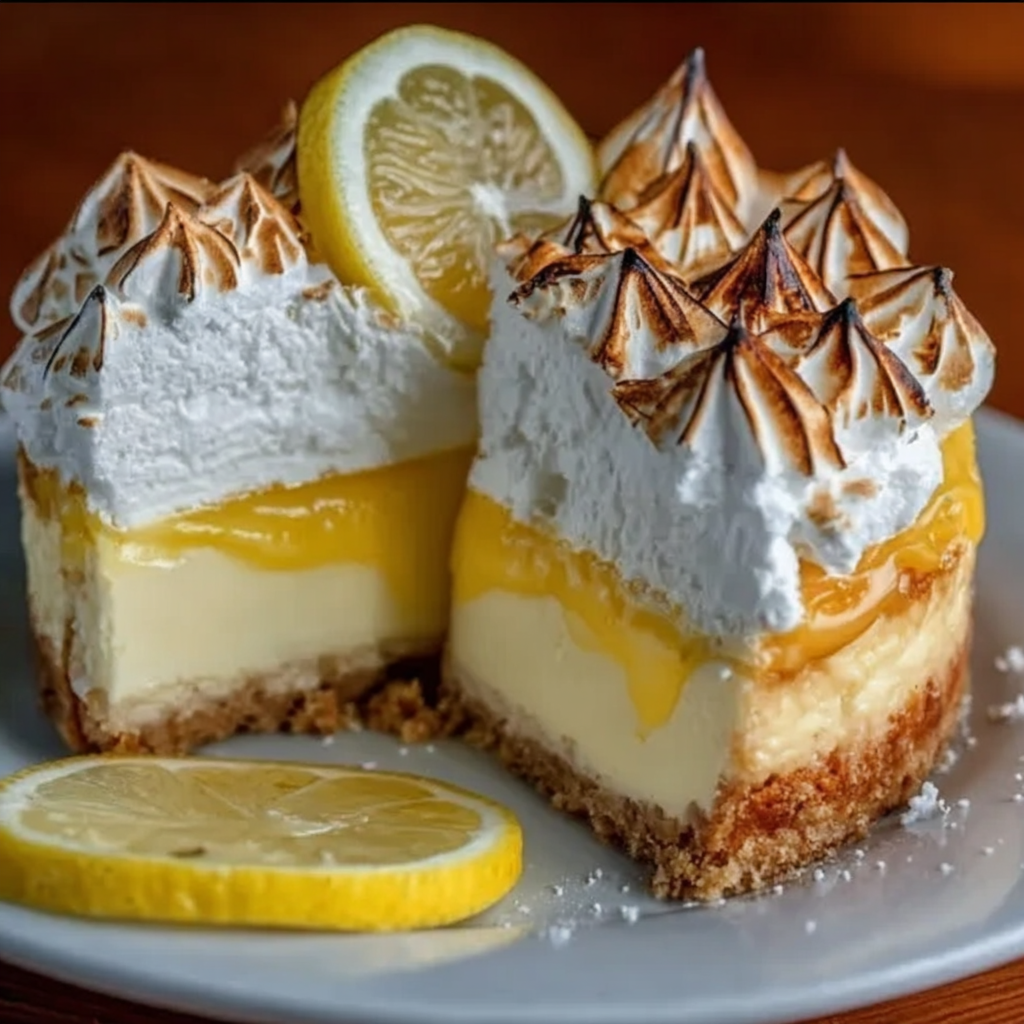
Lemon meringue cheesecake combines the tangy brightness of lemons with the creamy richness of cheesecake, topped with a light, fluffy meringue. This delightful dessert balances sweet and tart so wonderfully that it's perfect for any occasion, from festive gatherings to a simple weeknight treat.
Imagine slicing through a firm cheesecake base, only to reach the creamy lemon filling, all crowned with a fluffy cloud of meringue. Each bite is a delightful explosion of flavors and textures, making you crave more. This recipe invites you to create a masterpiece that looks as good as it tastes.
Ingredients
- 1 1/2 cups graham cracker crumbs
Graham cracker crumbs form the base of the cheesecake crust. They add a sweet, crunchy component that supports the creamy filling and prevents the cheesecake from being too soft. - 1/2 cup unsalted butter, melted
Melted butter binds the graham cracker crumbs together, providing fat that creates a rich and flavorful crust while helping it hold its shape. - 2 cups cream cheese, softened
Softened cream cheese is essential for a smooth and creamy filling. It gives the cheesecake its rich texture and serves as the foundation for the lemon flavor. - 1 cup granulated sugar
Granulated sugar sweetens the cheesecake, balancing the tartness of the lemon juice. It also contributes to the overall texture of the filling. - 1/4 cup freshly squeezed lemon juice
Fresh lemon juice is key to achieving that characteristic tang of lemon meringue cheesecake. Its acidity cuts through the richness of the cheese, enhancing flavor. - 1 tablespoon lemon zest
Lemon zest adds an intense citrus flavor and aroma to the cheesecake, providing a burst of freshness that elevates the entire dessert. - 3 large eggs
Eggs provide structure and stability to the filling, helping it to set properly while also contributing to the overall creaminess. - 1/4 cup light corn syrup
Light corn syrup is added to the meringue for stability. It helps prevent the sugar from crystallizing, ensuring a smooth texture. - 1/2 teaspoon cream of tartar
Cream of tartar is crucial for stabilizing the egg whites in the meringue, helping them to hold their shape and create a fluffy texture. - 1/2 cup powdered sugar
Powdered sugar sweetens the meringue while also providing a fine texture that dissolves easily, ensuring a smooth and glossy topping.
Directions & Preparation
Step 1: Prepare the crust: Preheat your oven to 350°F (175°C).
Preheating the oven ensures that the crust bakes evenly. Start by mixing graham cracker crumbs and melted butter until evenly coated, then press this mixture into the bottom of a springform pan. This crust needs to set firmly to support the creamy filling.
Step 2: Bake the crust: Place the crust in the oven and bake for 10 minutes.
Baking the crust helps it achieve a golden color and a crispy texture. Allowing it to cool completely before adding the filling is essential to ensure the layers don’t mix and maintain distinct flavor segments.
Step 3: Make the cheesecake filling: In a mixing bowl, beat the softened cream cheese until smooth. Gradually add in granulated sugar and mix until well combined.
Beating the cream cheese until smooth avoids lumps that could ruin the texture of the cheesecake. Gradually adding the sugar helps it dissolve fully, integrating sweetness throughout the filling.
Step 4: Add lemon juice, lemon zest, and eggs: Mix in the lemon juice and zest, then add the eggs one at a time, mixing until just incorporated.
Incorporating lemon juice and zest adds brightness to the filling while whisking in the eggs ensures a thoroughly combined mixture. Overbeating can introduce excessive air, leading to cracks during baking.
Step 5: Pour filling into cooled crust: Pour the cheesecake mixture onto the cooled crust, spreading it evenly.
Ensuring the filling is evenly spread helps it bake uniformly, contributing to a consistent texture. Having a smooth surface also makes it easier to add the meringue layer on top.
Step 6: Bake the cheesecake: Bake in the preheated oven for about 45-50 minutes, or until the center is set but slightly jiggly.
Baking the cheesecake until it’s set with a slight jiggle ensures a creamy texture once it cools. If it’s overcooked, the cheesecake could become dry, impacting the overall experience.
Step 7: Cool the cheesecake: Turn off the oven and crack the door, allowing the cheesecake to cool in the oven for an hour.
Gradually cooling the cheesecake in the oven reduces the risk of cracks forming on the surface. Once cooled, transfer it to the refrigerator to chill completely for at least 4 hours.
Step 8: Prepare the meringue: In a clean mixing bowl, beat the egg whites until soft peaks form, then gradually add cream of tartar, and the corn syrup, followed by powdered sugar until stiff peaks form.
Beating egg whites to soft peaks indicates they’ve reached a suitable volume. Adding cream of tartar stabilizes the meringue, helping it hold shape during baking, while gradually adding sugar contributes to its glossy finish.
Step 9: Spread meringue over cheesecake: Once the cheesecake is chilled, dollop the meringue on top and spread it out to seal the filling.
Sealing the filling with meringue not only keeps it moist but also adds an aesthetic appeal. Ensuring the meringue reaches the edges prevents shrinking during baking.
Step 10: Bake the meringue: Return the cheesecake to the oven and bake for 10-15 minutes until the meringue is golden brown.
Baking the meringue sets it and provides a golden finish, which contributes to both the look and texture. Watch closely; it can go from perfect to burnt quickly.
Step 11: Cool and serve: Allow the cheesecake to cool at room temperature before slicing and serving.
Cooling at room temperature enhances the flavors as they meld. Chilling briefly before slicing ensures the meringue and filling retain their distinct textures for a beautiful presentation.

The Importance of Fresh Ingredients
Using fresh ingredients can greatly elevate the flavors of your lemon meringue cheesecake. Freshly squeezed lemon juice and zest provide an intense citrus kick that bottled alternatives simply can't replicate. For the best results, select ripe lemons, and don’t skimp on the quality of your cream cheese, as this will influence the texture and creaminess of the final product.
Balancing Sweetness and Tartness
Achieving the perfect balance between sweet and tart is crucial in a lemon meringue cheesecake. While the sugar adds necessary sweetness, the tang from the lemon juice cuts through the richness of the cream cheese. Tasting your mixture at various stages will help you hone in on that ideal flavor dynamic, ensuring each slice is a delightful interplay between sweetness and acidity.
The Art of Perfect Meringue
Creating meringue may seem daunting, but understanding the process can yield impressive results. Key factors include ensuring your bowl and utensils are grease-free and using room temperature egg whites for better volume. Patience is important, as gradually adding sugar helps create a smooth, glossy finish, making your meringue not only delicious but also visually appealing.
FAQs
What if my meringue doesn’t hold its shape?
If your meringue doesn't hold its shape, it may be due to not beating the egg whites long enough or over-consolidating the mixture. Ensure all utensils are clean and try adding cream of tartar for better stabilization.
Can I use store-bought crust?
Yes, you can use a store-bought graham cracker crust if you prefer convenience. However, preparing your own allows you to customize the texture and flavor.
Why does my cheesecake have cracks?
Cracks in your cheesecake can occur from overbaking or sudden temperature changes. Avoiding excessive baking time and following the cooling steps can help maintain an even texture.
Can I reduce the sugar in the filling?
You can reduce sugar in the filling slightly, but be cautious as too little sugar can affect the texture and stability of the cheesecake.
What to do if my filling is too thick?
If your filling is too thick, consider adding a bit more lemon juice or cream to loosen it. This can help achieve a smoother consistency before baking.
How do I achieve a shinier meringue?
To achieve a shinier meringue, ensure your sugar is fully dissolved during mixing. Beating until stiff peaks form will also contribute to a glossy appearance.
Conclusion
Baking a lemon meringue cheesecake is an indulgently rewarding endeavor that pays off in flavor and presentation. The harmonious blend of creamy cheesecake, zesty lemon, and fluffy meringue creates a dessert that feels both elegant and comforting.
This dessert is sure to impress guests or just elevate your everyday dining experience. With the right techniques and a bit of patience, you can master this delightful treat that will leave everyone wanting more.
Recipe Card
Notes
Additional serving suggestions: pair with a crisp salad, garlic bread, or roasted seasonal vegetables for balance.
For make-ahead, prep components separately and assemble just before heating to preserve texture.
Taste and adjust with acid (lemon/vinegar) and salt right at the end to wake up flavors.