Introduction
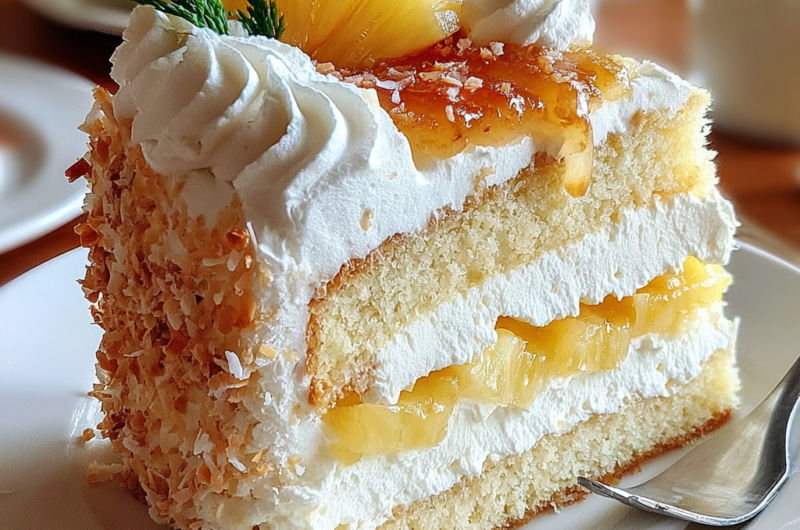
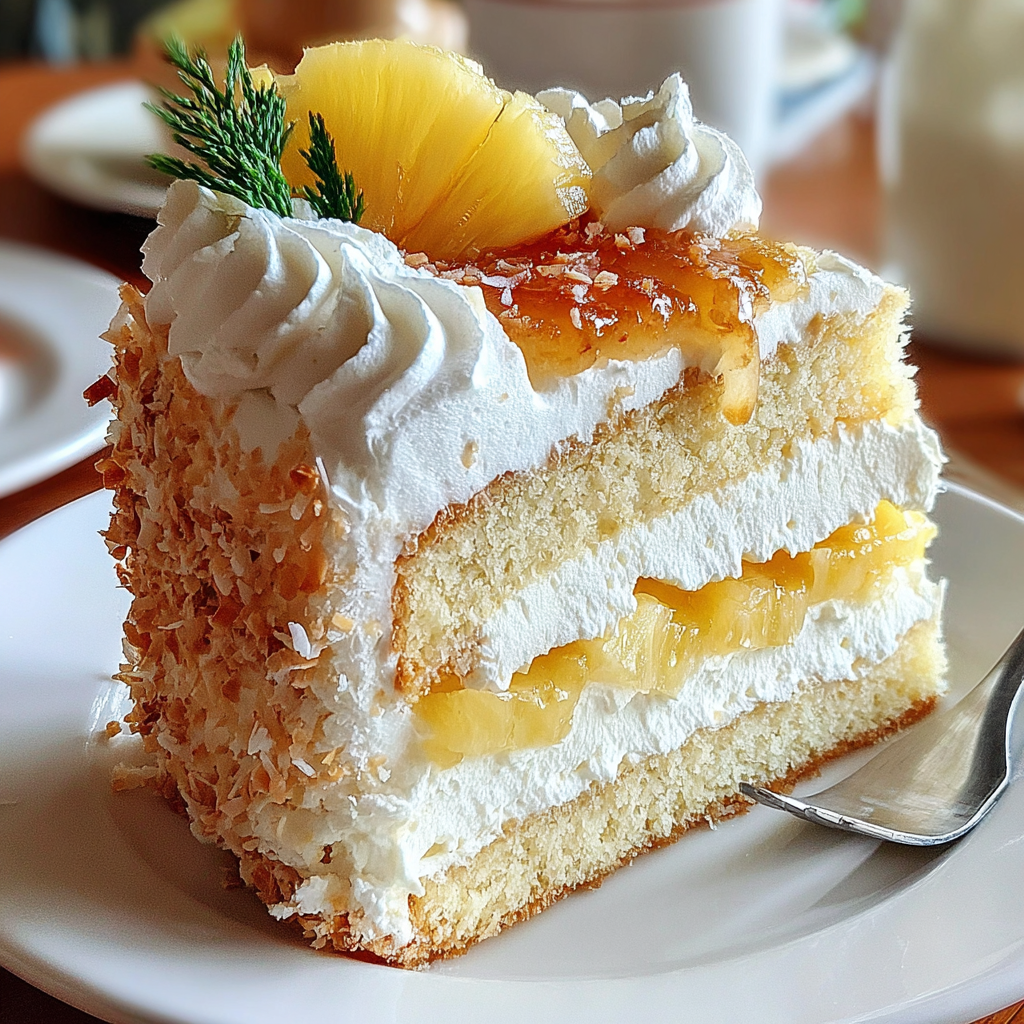
A slice of paradise awaits you with this Hawaiian Pineapple Coconut Dream Cake. Bursting with tropical flavors, this cake is a delightful creation that brings the essence of Hawaii to your kitchen. Perfectly moist and covered in a creamy coconut frosting, it's the ideal dessert for special occasions or simply to brighten up your day.
The combination of sweet, ripe pineapples and rich coconut transforms this cake into a lush experience that feels like a vacation. It's a versatile treat that can be served year-round, yet it feels especially refreshing during warmer months, making it a favorite among family and friends.
Ingredients
- 2 cups all-purpose flour
The foundation of the cake, all-purpose flour provides structure and stability. Its gluten content allows the cake to rise, giving it a soft, fluffy texture. - 2 tsp baking powder
Baking powder is the leavening agent that helps the cake rise and achieve a light, airy texture. It reacts with moisture and heat to produce carbon dioxide bubbles, which create lift. - 1/2 tsp baking soda
Adding a bit of baking soda helps balance the acidity of the pineapple and contributes to the cake's leavening. It ensures a tender crumb and can enhance browning. - 1/2 tsp salt
Salt amplifies the flavors in the cake, balancing sweetness and enhancing the overall taste of all the ingredients. - 1/2 cup unsalted butter, softened
Butter adds richness and moisture, creating a dense yet airy texture in the cake. It also contributes to a deliciously rich flavor. - 1 cup granulated sugar
Sugar not only sweetens the cake but also aids in achieving the right texture by helping to aerate the batter when creamed with butter. - 1/2 cup brown sugar
Brown sugar introduces a deeper flavor due to its molasses content, adding complexity to the sweetness and moisture. - 4 large eggs
Eggs bind the ingredients together, contributing to the cake's structure and moisture, while also providing richness to the flavor. - 1 cup crushed pineapple, drained
Crushed pineapple adds moisture and natural sweetness to the cake, while imparting a fresh, fruity flavor that defines this tropical treat. - 1 cup shredded coconut, sweetened
Coconut brings a delightful chewiness and enhances the tropical flavor profile, adding a touch of richness and texture. - 1 tsp vanilla extract
Vanilla extract infuses the cake with a warm, sweet aroma and complements the other flavors beautifully. - 1 cup heavy cream
Heavy cream creates a luxurious, creamy frosting that enhances the cake’s decadence. It adds richness and is perfect for whipping into peaks. - 1 cup powdered sugar
Powdered sugar sweetens the frosting and contributes to a smooth, spreadable texture, helping it hold its shape. - 1/2 cup additional shredded coconut (for topping)
This additional coconut provides texture and visual appeal, enhancing the tropical theme of the cake.
Directions & Preparation
Step 1: Preheat your oven to 350°F (175°C).
Preheating the oven ensures that the cake bakes evenly. If the oven isn’t hot enough at the start, the cake may not rise properly, affecting its texture.
Step 2: Grease and flour two 9-inch round cake pans.
Properly greasing and flouring the pans prevents the cake from sticking, ensuring that they release cleanly after baking. This step is crucial for a beautiful cake without any crumbling.
Step 3: In a medium bowl, whisk together the flour, baking powder, baking soda, and salt.
Whisking the dry ingredients together ensures they are evenly distributed, preventing clumps. This step is vital for consistent leavening and overall texture.
Step 4: In a large mixing bowl, cream the softened butter, granulated sugar, and brown sugar until light and fluffy.
Creaming the butter and sugars introduces air into the mixture, which helps the cake rise and develop a light texture. Aim for a pale color and fluffy consistency.
Step 5: Add the eggs one at a time, mixing well after each addition. Then stir in the vanilla extract.
Adding eggs gradually allows them to incorporate smoothly into the batter. This improves the emulsification, leading to a richer consistency and better structure.
Step 6: Gradually add the dry mixture to the butter mixture, alternating with the drained crushed pineapple. Mix until just combined.
This method helps maintain the cake's airy texture by minimizing gluten formation. Alternating with the pineapple maintains moisture without overmixing, which can toughen the cake.
Step 7: Fold in the shredded coconut gently until evenly distributed.
Folding prevents the deflation of the batter, ensuring the coconut is mixed without overworking the blend. This step helps retain the light and airy quality.
Step 8: Divide the batter evenly between the prepared pans and smooth the tops.
Even batter distribution ensures both layers bake uniformly, which is essential for even frosting application and a balanced appearance.
Step 9: Bake for 25-30 minutes or until a toothpick inserted in the center comes out clean.
Baking until the toothpick comes out clean guarantees that the cake is fully cooked. This avoids a moist, raw center, which can undermine texture and flavor.
Step 10: Cool the cakes in the pans for 10 minutes, then transfer them to a wire rack to cool completely.
Cooling in the pans sets the structure, allowing the cakes to firm up. Transferring to a wire rack promotes even cooling, crucial for layering and frosting.
Step 11: While the cakes cool, prepare the frosting by beating the heavy cream and powdered sugar until stiff peaks form.
Whipping the cream until stiff peaks ensures a firm, spreadable consistency for frosting. This step is important for maintaining structure when layered on the cake.
Step 12: Once the cakes are fully cooled, place one layer on a serving plate and spread a generous amount of frosting on top.
Spreading frosting on a cooled cake prevents melting and sliding, enabling easy layering. A generous amount ensures a rich taste in each bite.
Step 13: Carefully place the second layer on top and frost the top and sides of the entire cake.
Covering the entire cake with frosting not only enhances visual appeal but also locks in moisture, keeping the cake fresh longer.
Step 14: Finish by sprinkling additional shredded coconut on top for garnish.
Garnishing with coconut not only adds a beautiful aesthetic but also enhances the flavor profile, making it more inviting and visually appealing.

The Role of Fresh Pineapple in Flavor
Using fresh, well-drained pineapple elevates this cake by infusing it with vibrant flavors and moisture. It lends a natural sweetness and a slight acidity that brightens each bite. If fresh pineapple isn’t available, opt for quality canned options, ensuring they are well-drained to avoid excess moisture in your batter.
Coconut's Essential Texture and Flavor
Shredded coconut serves a dual purpose in this cake: it adds a chewy texture that contrasts beautifully with the softness of the cake layers while deepening the coconut flavor. Sweetened coconut is preferred for its flavor potency, but unsweetened can be used depending on your desired sweetness level.
Frosting Techniques for a Professional Finish
Achieving a smooth, even frosting requires patience and technique. Start with a crumb coat— a thin layer of frosting that seals in crumbs— before applying a thicker layer. This method ensures a clean finish and prevents unsightly crumbs from appearing in your final product, giving your cake a polished and inviting look.
FAQs
What can I do if my crushed pineapple is too wet?
If your crushed pineapple is too wet, press it in a fine-mesh sieve to remove excess juice. This will prevent your cake from becoming too soggy.
How do I keep my cake layers from sinking after baking?
Ensure that you properly measure your ingredients and avoid overmixing the batter after incorporating the flour. Overmixing can cause the cake to be dense and lead to sinking.
Can I replace the heavy cream in the frosting with evaporated milk?
While you can substitute evaporated milk, the frosting will not be as rich or stable. Heavy cream is best for achieving the desired texture and stability.
What should I do if my frosting is too thin?
If your frosting is too thin, you can gradually add more powdered sugar, mixing until the desired thickness is achieved. Another option is to chill it slightly to allow it to firm up.
How can I make this cake in a different pan size?
Adjusting the baking time is essential if you use different pan sizes. Smaller pans usually require less baking time, while larger pans might need more.
What if I want to add a layer of flavor to the cake?
You can incorporate spices like cinnamon or nutmeg to the batter for an extra depth of flavor. Just a teaspoon or two can make a big difference.
Conclusion
This Hawaiian Pineapple Coconut Dream Cake is sure to become a beloved recipe in your rotation, offering a sweet escape to a tropical paradise with every bite. With its moist layers and rich frosting, it’s perfect for any occasion, inviting friends and family to indulge in the delightful flavors of the islands.
Don't forget to experiment with different garnishes and creativity in presentation to make it uniquely yours. Enjoy the process of baking this cake as much as you savor the final product, and share the joy of this delicious creation with those you love.
Recipe Card
Indulge in a Tropical Hawaiian Pineapple Coconut Cake
Ingredients
Method
- Preheat your oven to 350°F (175°C).
- Grease and flour two 9-inch round cake pans.
- In a medium bowl, whisk together the flour, baking powder, baking soda, and salt.
- In a large mixing bowl, cream the softened butter, granulated sugar, and brown sugar until light and fluffy.
- Add the eggs one at a time, mixing well after each addition. Then stir in the vanilla extract.
- Gradually add the dry mixture to the butter mixture, alternating with the drained crushed pineapple. Mix until just combined.
- Fold in the shredded coconut gently until evenly distributed.
- Divide the batter evenly between the prepared pans and smooth the tops.
- Bake for 25-30 minutes or until a toothpick inserted in the center comes out clean.
- Cool the cakes in the pans for 10 minutes, then transfer them to a wire rack to cool completely.
- While the cakes cool, prepare the frosting by beating the heavy cream and powdered sugar until stiff peaks form.
- Once the cakes are fully cooled, place one layer on a serving plate and spread a generous amount of frosting on top.
- Carefully place the second layer on top and frost the top and sides of the entire cake.
- Finish by sprinkling additional shredded coconut on top for garnish.
Notes
Additional serving suggestions: pair with a crisp salad, garlic bread, or roasted seasonal vegetables for balance.
For make-ahead, prep components separately and assemble just before heating to preserve texture.
Taste and adjust with acid (lemon/vinegar) and salt right at the end to wake up flavors.